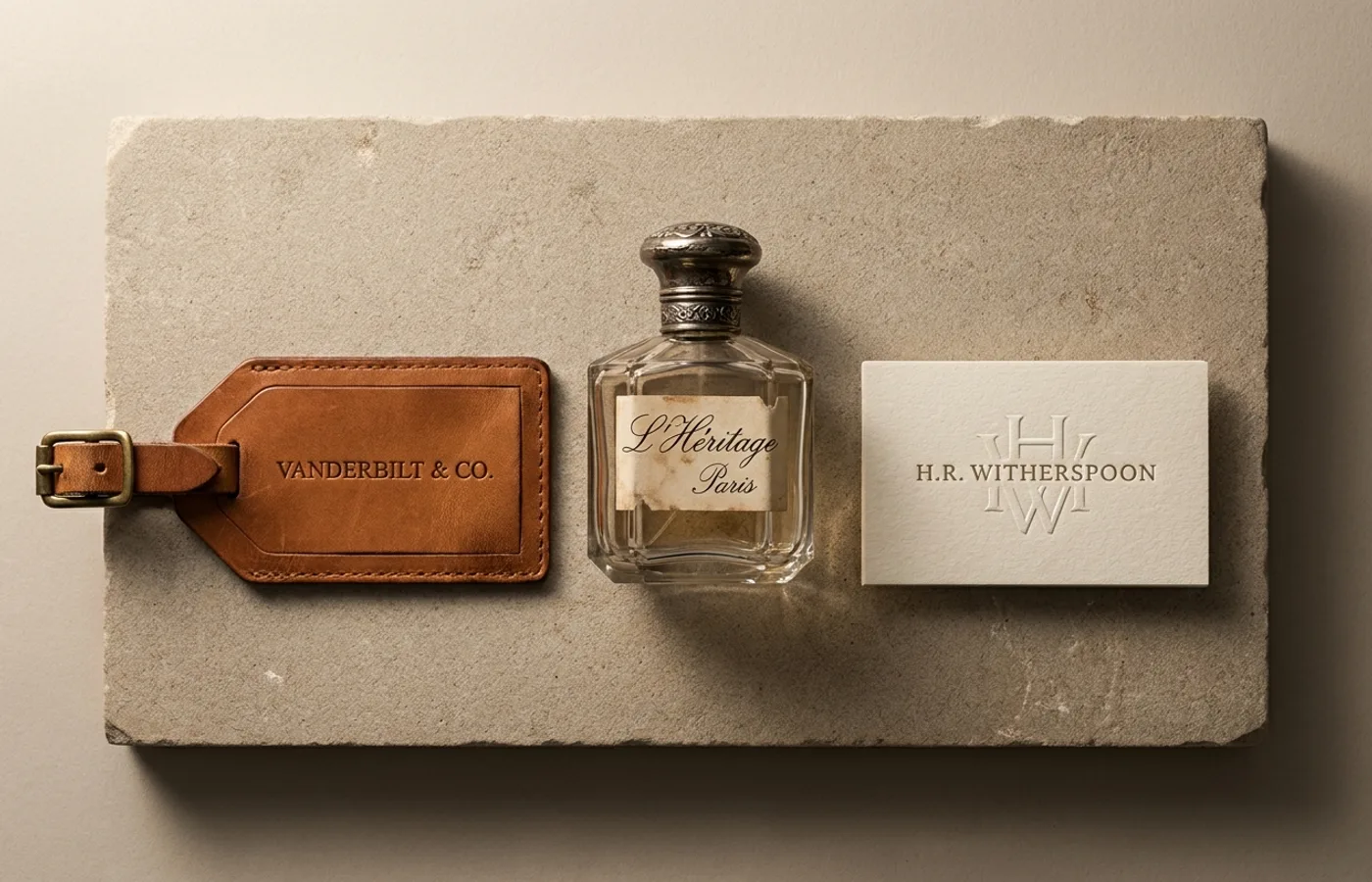
Run a simple audit. Pull the 50 most durable consumer brands in luxury, fashion, beauty, food, or DTC — the brands that have maintained both relevance and pricing power across multiple decades. Note which are named after a person and which are not.
The person-named brands dominate the list. Hermès, Chanel, Louis Vuitton, Dior, Cartier, Tiffany, Warby Parker, Glossier, Aesop (named for the Greek fabulist), Tesla (named for Nikola Tesla), Ben & Jerry's, Saint Laurent, Miu Miu, Charlotte Tilbury, Le Labo (the person is implied), Patagonia (named after a place, but it's the place the founder named himself for). The concept-named brands — names invented from whole cloth to evoke a quality or a feeling — are the minority, and they tend not to make it to the 50-year mark.
This is not a sentimental observation. It's a structural one, and the reasons are worth understanding before the next founder brainstorming session produces a made-up word with a silent letter.
Why Eponymous Names Are Structurally Stronger
Three properties give person-named brands a durability advantage that invented-word brands cannot match.
Inherent narrative. A person-named brand comes with a built-in origin story, whether or not the person actually founded the company. Every customer interaction creates the implicit question: who is Hermès? Who was Aesop? The name carries a thread to pull. Invented-word brands — Airbnb, Zillow, Lyft, Etsy — have no equivalent thread. The name is designed to be memorable, not to reward investigation. This has consequences for how deeply a customer engages with the brand's mythology.

Legal distinctiveness. Personal names, particularly surnames, are trademarkable in ways generic words are not. "Apple" is a trademark only in the specific category context of computers. "Warby Parker" is a trademark in every context. This matters over time as a brand expands into adjacent categories. An eponymous brand can extend into any product category without re-establishing trademark strength. A concept-named brand often has to re-acquire trademark rights at every category jump.
Resistance to generic drift. Trademarks get weaker when they become generic — "hoover" is now a generic term for vacuuming, "jacuzzi" for a hot tub. Person-named brands are almost immune to this drift. No one has ever used "chanel" as a generic verb for perfumery. The specificity of the name creates a legal and cultural firewall against the brand being absorbed into common vocabulary. For brands that intend to operate for generations, this matters.
Why Invented-Word Brands Still Get Commissioned
If person-named brands are structurally stronger, why does the naming agency industry consistently produce invented-word names? Three reasons, all of them understandable and most of them wrong.
Founder modesty. Many founders don't want their brand named after them for reasons of humility or risk-aversion. The concern is that tying the brand to a personal reputation creates asymmetric downside — if you, the founder, do something embarrassing, the brand takes the hit. This is real but overweighted. Most founder scandals that damage eponymous brands (Weinstein, Martha Stewart) produce short-term damage that the brand recovers from on timescales shorter than brand assets compound over.
Domain availability. In the 1995–2015 era, dot-com domain scarcity made invented-word names structurally attractive. You could not get hermes.com; you could get airbnb.com. This incentive has weakened significantly as domain expansions (dot-co, dot-app, dot-studio) opened new paths. The historical rationale for invented-word names is less binding than it was.
The agency incentive. Naming agencies charge more for invented-word names because the process of generating, legally clearing, and linguistically testing a coined term is more labor-intensive than registering a founder's surname. The incentive inside naming agencies is toward invented words because the invoice is bigger. This is a structural bias in the category you should be aware of before you commission.
When a Non-Person Name Actually Works
The exceptions are instructive. Apple, Patagonia, Tiffany, Nike — brands named after things or places or mythologies — succeed by treating the name as if it were a person. They build it a voice, a point of view, a set of beliefs, and they treat the name as a character who persists across decades of product decisions. The name becomes biographical even when it refers to something non-biological.
This is hard to pull off, and it requires the same multigenerational patience that founder-named brands get almost for free. Most non-person names never get that patience.
The Decision
If you're naming a brand in 2026 and you want it to matter in 2056, the default should be an eponymous or place-name choice. The invented-word path requires a harder argument to justify, and most invented-word brands you can name from the last two decades will not make it to 2056.
The exceptions prove the rule. They demonstrate how much structural work a non-person name has to do to survive. The default path — your surname or a place you care about — is doing that work for free.