A client briefing document crosses a studio's desk. The scope line reads: "We need a new brand identity." The studio accepts the project. Six months later, a beautiful final deliverable ships — logo, color palette, typography, photography guidelines, tone-of-voice document, the works. The client takes delivery, pays the invoice, and six weeks later emails the studio asking why their Instagram, their app, and their retail signage don't feel consistent with each other.
The studio delivered exactly what was asked for. The client asked for the wrong thing.
This happens constantly because two terms — brand identity and brand system — are used interchangeably in the industry and they refer to structurally different deliverables. The distinction matters. Getting it wrong costs brands anywhere from $50K to $5M over a multi-year period. Here's the real definition of each.
Brand Identity
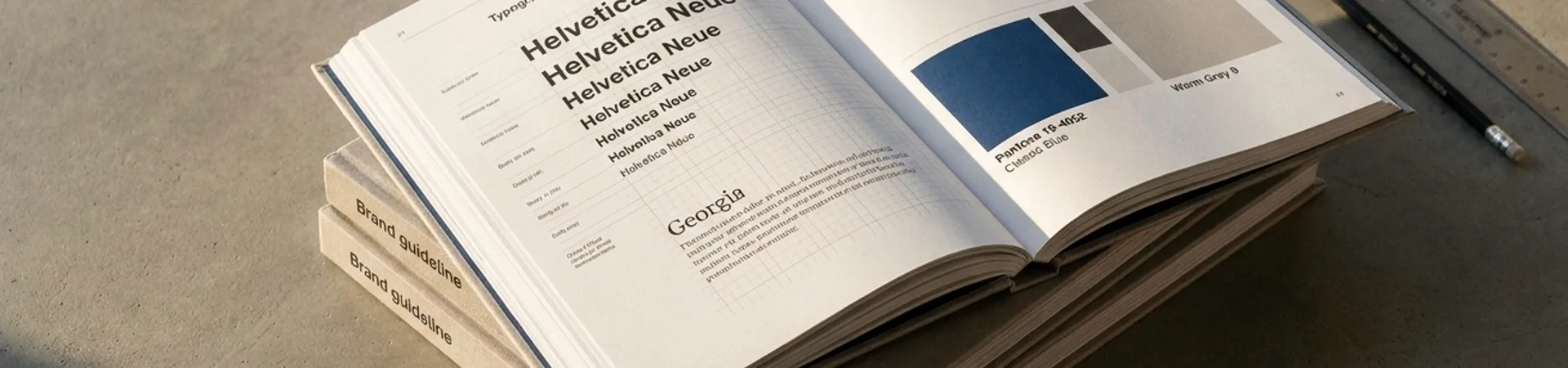
A brand identity is a static set of visual and verbal assets that collectively describe how a brand presents itself. The deliverables are typically:
- Logo suite
- Primary and secondary color palette
- Primary and secondary typography

- Photography style guidelines (mood, treatment, subject matter)
- Tone-of-voice documentation
- Usage rules (clearspace, minimum sizes, do's and don'ts)
- Brand guidelines document that captures all of the above
This is what most "brand identity" projects deliver. The deliverable is a PDF or a set of files. The brand identity is finished when the files are handed over. It is, fundamentally, a reference document.
A brand identity answers the question: what does this brand look like?
Brand System
A brand system is an operating capability — a set of rules, components, and governance processes that let the brand be produced consistently in every future context by people who were not in the original design project.
The deliverables of a brand system are different:
- A component library (usually in Figma) of actual production-ready assets
- A design-tokens specification (colors, typography, spacing as named variables, not just swatches)
- Template files for every format the brand ships in (ad creative, packaging, landing page sections, in-store signage, social posts)
- Governance documentation: who approves new components, how variations get added, how deviations get approved or killed
- A working design system in code for digital surfaces
- A decision framework for edge cases the original project did not cover
A brand system is never finished. It is maintained indefinitely.
A brand system answers the question: how does this brand produce work consistently over time, across teams and surfaces, without the original design team being in the room?
Where the Confusion Costs Money
The costliest pattern in the industry: a brand pays for a brand identity project thinking they're getting a brand system, and discovers 6–18 months later that they need to commission a second project to actually operationalize the work.
Symptoms that an identity was delivered when a system was needed:
- New designers joining the team can't produce consistent work even with the guidelines document open
- Two pieces of brand work produced by different teams in the same month feel like they come from different brands
- The marketing team keeps emailing the original studio to ask "is this okay?"
- Extensions to new product lines require the original studio to come back for a revision scope
- The guidelines document is 80 pages long and nobody reads past page 20
The fix, once the symptoms are recognized, is expensive. Either you hire a new team to operationalize the identity into a system (6–12 months, $150K–$500K for a serious operation), or you live with the brand fragmentation, which compounds over years into a brand that nobody can produce for without expert supervision.
What To Commission
If you are a brand team briefing a new project, be specific about which deliverable you need.
Commission a brand identity when your scope is a one-shot project — a launch, a new sub-brand, a 2-week campaign. The identity PDF is sufficient.
Commission a brand system when the brand will be produced by multiple people, across multiple surfaces, for multiple years. The PDF is insufficient. You need the component library, the tokens, the templates, and the governance.
Commission both, sequentially, when you're doing a major brand refresh that will run the company for the next decade. The identity work should precede the system work; the system work operationalizes the identity. Expect the total scope to cost 2–4x what an identity-only project would cost, and expect the multi-year ROI to be higher.
The Three-Sentence Summary
A brand identity is a look. A brand system is a capability. Confusing them is the single most common reason brand investments underperform, and the fix is almost always more expensive than getting it right the first time.