Seaweed, Mushroom, Mycelium: The Bio-Material Packaging Wave
The new generation of bio-material packaging has moved past proof-of-concept. A field guide to seaweed films, mycelium protective packaging, and bio-composite papers — the categories, the brands, and the aesthetic language still being invented.
Bio-material packaging — seaweed, mushroom mycelium, and related organic substrates — has moved past proof-of-concept in the last 24 months. Consumer-facing brands are shipping at meaningful volume, and the cost curve has crossed the point where the specification is economically competitive with petroleum-based alternatives in several categories.
Seaweed is strongest in single-serve dissolvable packaging; mycelium is strongest in rigid protective packaging; hybrid paper-based bio-composites are emerging as the bridge category bringing the aesthetic into mainstream consumer goods.
The design language is still being invented. Early adopters get an authenticity advantage; late adopters will inherit whatever aesthetic convention the early category settles into.
---
For twenty years the phrase "biodegradable packaging" was a marketing claim more than a material specification. The products that carried the label were usually petroleum-derived plastics with enzyme additives — "biodegradable in industrial composting conditions" was the fine print. Consumers learned to distrust the category; designers learned to work around it.
The last two years have changed the reality underneath the claim. A new generation of bio-materials — actually organic in origin, actually compostable without special conditions, actually suitable for packaging at consumer scale — has reached commercial viability. This piece covers three of them (seaweed, mushroom mycelium, and related bio-composites), the brands using them, and the design implications.
What it is: Film-forming polymers derived from brown and red algae (primarily Laminaria and Gelidium species). The commercial category leader is UK-based Notpla, whose edible and home-compostable film has been adopted across several high-profile applications.
Where it works: Single-serve liquid packaging (sachets, pods, dissolvable packets), dry-goods membrane packaging, coatings for paperboard to add moisture resistance without a petroleum-based layer.
Where it struggles: Structural rigidity. Seaweed-derived films are thin-film materials; they cannot replace rigid containers without composite structures.
Aesthetic properties: Translucent to semi-opaque, slight natural coloration (ranging from amber to pale green depending on species and processing), glossy on one face and matte on the other. Printable, though ink ranges are narrower than on petroleum-based films.
Brands to watch: Major food-service deployments (Just Eat Takeaway with Notpla sachets), beauty sample-pack applications, niche beverage category trials.
Mushroom mycelium
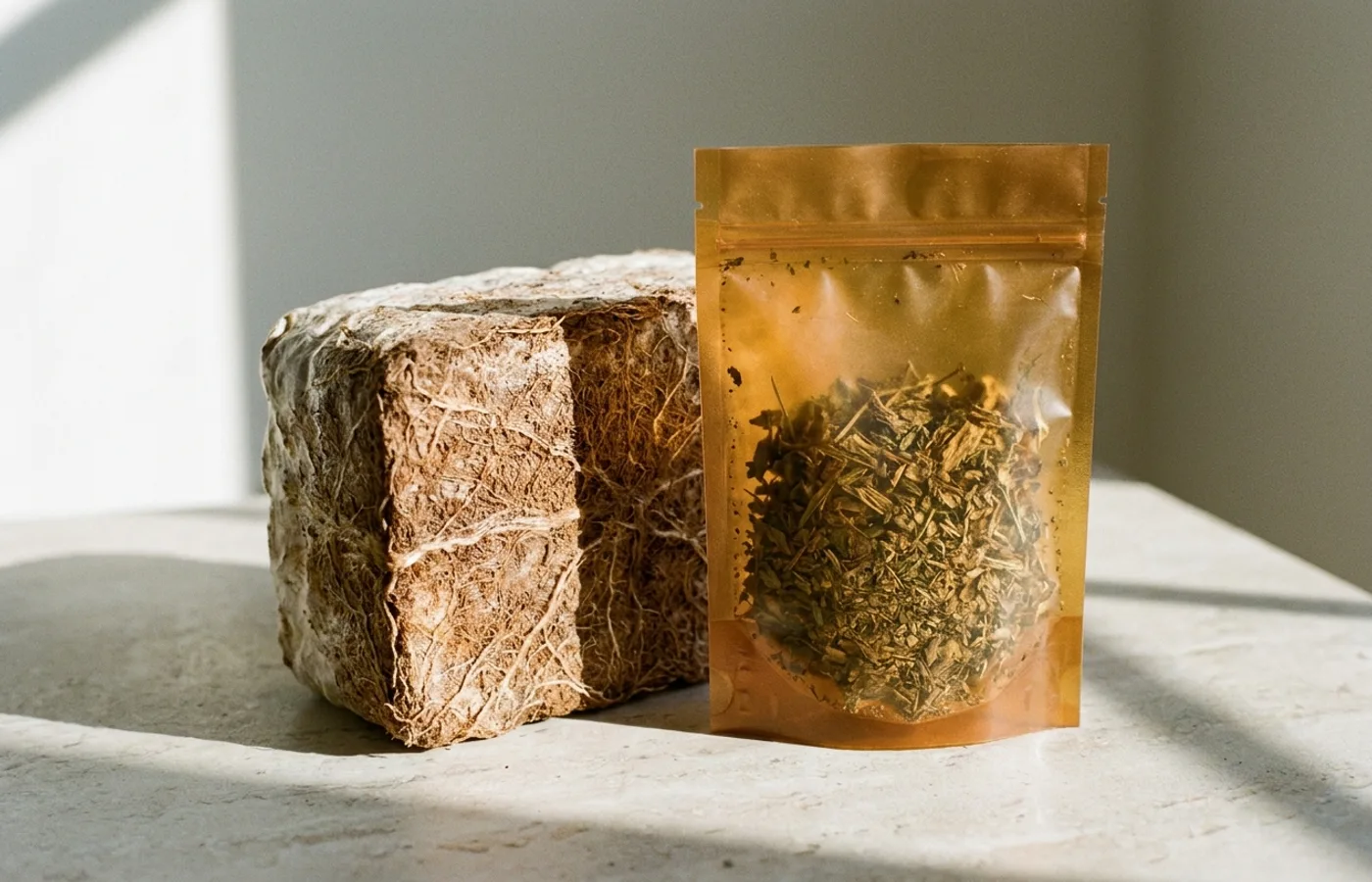
What it is: The vegetative root structure of fungi, grown on agricultural waste substrates, then heat-pressed into rigid shapes. The commercial category leader is US-based Ecovative (and its brand extension Mushroom Packaging), which has shipped millions of units of protective packaging for IKEA, Dell, and other consumer-electronics and furniture companies.
Where it works: Rigid protective packaging, void-fill (the foam blocks inside electronics boxes), wine-bottle shippers, furniture corner protectors, some cosmetic rigid containers.
Where it struggles: Transparent or translucent applications. Mycelium packaging is opaque and naturally colored (cream to tan to warm brown); transparent variants do not exist at commercial scale.
Aesthetic properties: The surface texture is organic and slightly irregular — the material is alive while growing and the history of that growth is visible in the finished surface. Not standardizable in the way petroleum-derived foams are, which is either an asset (authenticity) or a liability (quality-control concerns) depending on the brand's positioning.
Brands to watch: Dell packaging (years-running), IKEA packaging (multi-year rollout), boutique spirits brands using mycelium shippers, cosmetic brands in the premium skincare category.
Bio-composite papers (the bridge category)
What it is: Paper and paperboard substrates infused with agricultural-waste fibers (tomato-vine waste, coffee grounds, eucalyptus byproducts, seaweed) to create distinctive papers that are still mono-material paper-based from a recycling standpoint but carry a visible bio-material narrative.
Where it works: Primary packaging for food, premium cosmetics, and anything that previously used high-end uncoated or textured paper stocks.
Aesthetic properties: Speckled, textured, warm-toned. Reads as "handmade" without the craft-fair connotation that label can carry in adjacent categories.
Brands to watch: Specialty food brands, contemporary skincare, wine and spirits label paper programs.
The brands shipping bio-material at scale
The category is still small enough that most commercial deployments are discoverable by name. A representative but not exhaustive list, across categories:
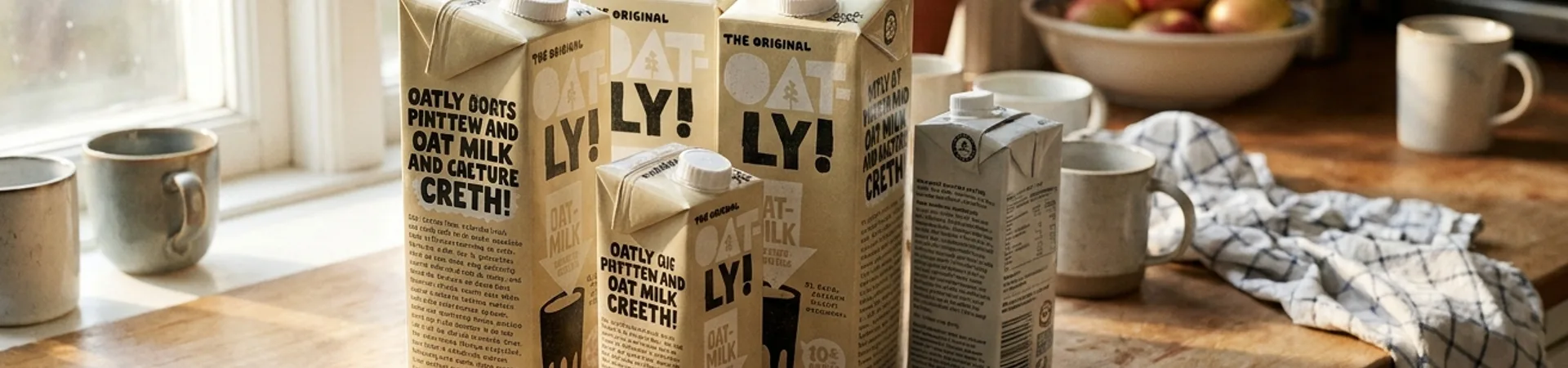
Food and beverage. Oatly's packaging program has experimented with multiple bio-composite substrates while maintaining the brand's signature cream-paper aesthetic. I AM ITALIANO by Sabadì uses bio-composite label stocks on their premium chocolate bar packaging. Just Eat Takeaway's single-serve sauce deployments use Notpla seaweed films.
Beauty. Lush has deployed mycelium-based secondary packaging across a portion of their product line. Glossier's packaging research team has published bio-composite pilot work for cosmetic primary packaging. The category's pain point remains pumps and dispensers that are not yet available in bio-material specifications.
Consumer electronics. Dell's laptop packaging has used mycelium void-fill for nearly a decade (an early proof case). Smaller electronics brands are experimenting with similar protective-packaging specifications. Apple's packaging program, while not mycelium-based, represents the adjacent commitment to paper-over-plastic specification at consumer-electronics scale.
Furniture and interiors. IKEA's move toward mycelium packaging for select product lines is the most-visible consumer-scale deployment of the material. Maleela Rise's residential-development marketing program has used bio-composite paper for printed collateral, signaling the category's move into adjacent non-product applications.
Fashion and textiles. The category is active but less publicly visible. Several European heritage brands including Loewe have reportedly deployed bio-composite materials in garment shipping and secondary packaging. Toteme's sustainability disclosures suggest parallel work.
The design language (still being invented)
Early bio-material packaging has developed a small set of recurring aesthetic characteristics. Whether these become category conventions or get displaced by a different aesthetic as the category scales is an open question. Worth noting either way because early adopters have an opportunity to define.
Visible texture. The mycelium surface, the seaweed film's slight organic coloration, the speckled bio-composite paper — these are all material-driven aesthetic features that the design cannot hide. Contemporary bio-material packaging either embraces the texture (premium positioning) or fights it with coatings (middle-market positioning).
Naturalistic color palettes. Warm creams, muted greens, soft tans. The bio-material categories do not currently render saturated colors well, so packaging systems using them tend to lean into the earth-tone constraint rather than against it.
Typographic restraint. Related to the mono-material conversation from our companion article, the ink range available on bio-material substrates tends to be restricted. Designers are responding by committing to fewer typefaces, tighter spacing, more disciplined hierarchy.
Copy-led narrative. When the material itself is a talking point, packaging often dedicates real estate to explaining the material. This works when the brand voice can carry the explanation without becoming preachy — Patagonia does this well. It fails when the brand voice cannot credibly hold the explanation.
What this means for designers
The opportunity for packaging designers is larger than the constraint suggests. Three specific practices will compound advantage over the next 24 months.
Develop a bio-material sample library. Most studios still prototype in petroleum-derived film and foam. A studio with direct hands-on familiarity with ten or fifteen bio-material substrates has a positioning advantage with any sustainability-forward client.
Build relationships with the material suppliers. Ecovative, Notpla, PulpWorks, Sway, and similar category leaders are still small enough that direct supplier relationships are achievable. Studios that establish these relationships early will have consultation-stage input on material specifications that will define category standards for the rest of the decade.
Treat the aesthetic decisions as durable ones. Whatever visual language emerges as the bio-material category's dominant aesthetic in 2026–2028 is likely to stabilize for at least a decade. Studios investing in the aesthetic now — rather than designing around it until it becomes category-convention — are likely to have the strongest portfolios in that timeframe.
Bio-material packaging has crossed the commercial threshold. The aesthetic language is still being invented. Studios that engage the category now — with hands-on material experience, direct supplier relationships, and intentional aesthetic positioning — will have portfolios in 2028 that their late-adopting peers cannot match.